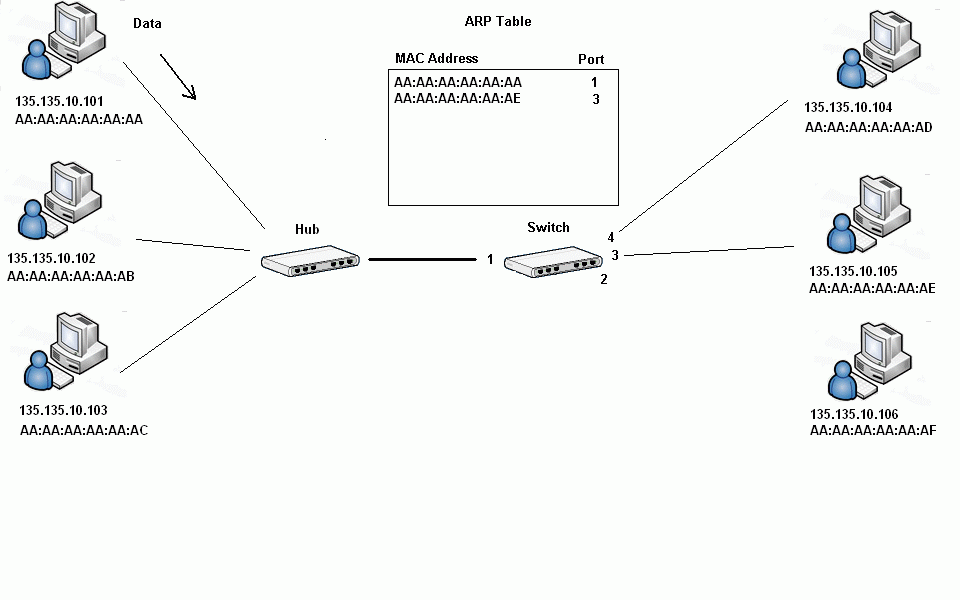
When the switch has nothing in its ARP table, it acts as a hub. If it receives a packet, it will broadcast it to all ports. As the network continues to send packets, the ARP table continues to grow until the switch knows which hosts are on which ports. It will then only send packets destined for a specific host to the port that the host is located. This cuts down on network overhaed and traffic drastically.
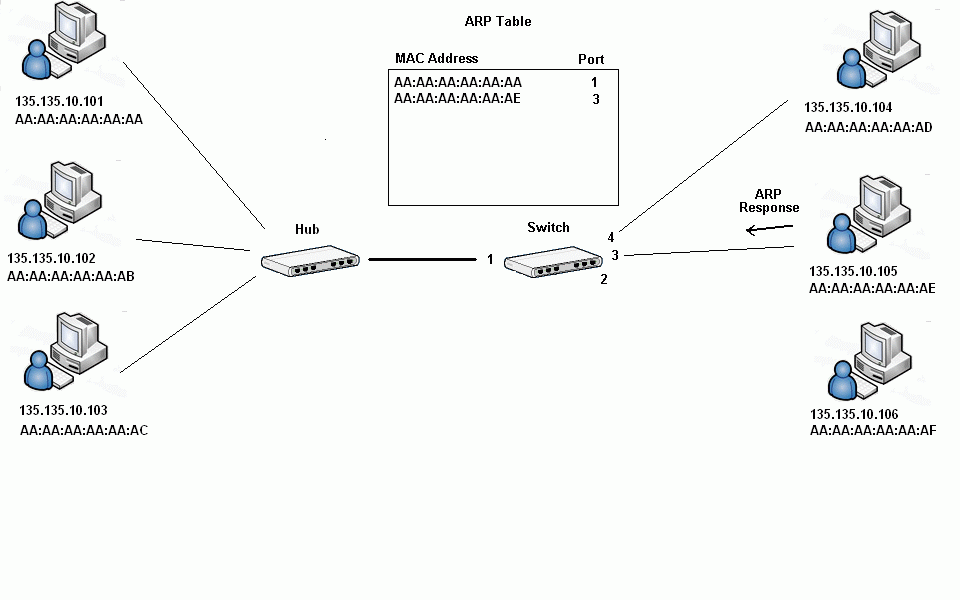
When Host 105 receives the ARP request, it sends an ARP Response which basically says, "Here's my IP address and my MAC Address." The switch will receive the packet destined for Host 105 and first recognize the MAC address of host 105. It will add the MAC address and port of Host 105 to its ARP table. Then, it will lookup the MAC addresses it has in its ARP table and see that Host 101's MAC address is there and only forward the packet to that port (in our case, port 1).
![[logo]](logo.png)
|
Networking Slide 8 |