Let's say that host 101 wants to perform a web browser session with host 105.
First, the web browser will request a connection to the Application layer. The TCP layer will break up the request (if necessary) into blocks,order the blocks and pass each block to IP. IP will address the blocks with the source and destination IP address and pass each packet to the Data Link layer. The Data Link layer will not initially know the MAC address for host 105, so it performs an ARP request over the network.
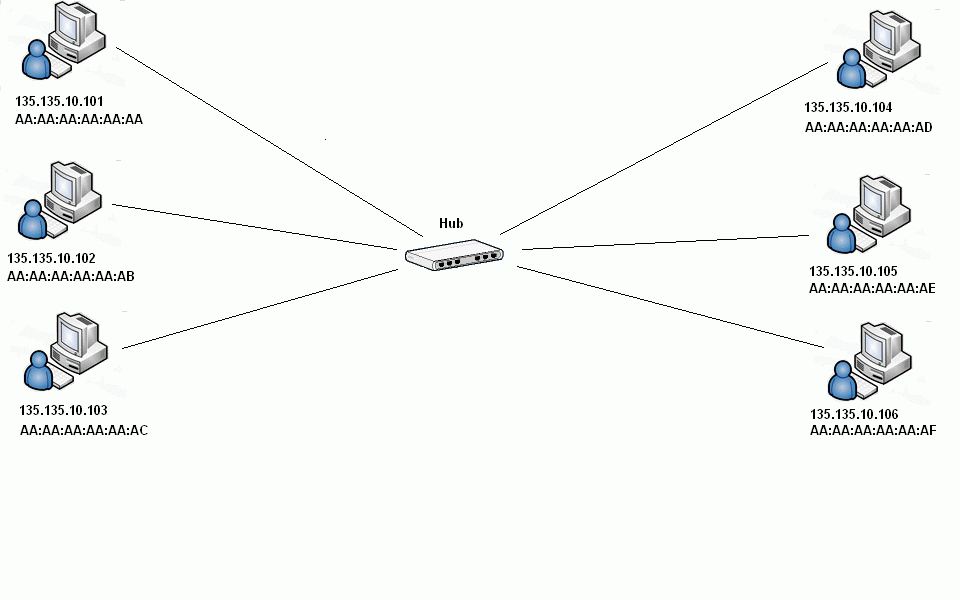
The ARP request from host 101 will exit the wire and hit the Hub. A hub was used in this example as a dumb device initially so that more complex items can be added later after the fundamentals are fully understood. The hub sends the packet to all hosts to which it is connected. Host 105 will recognize it as a packet destined for it, pick it up and perform an ARP response directed at host 101. The ARP request is simply saying, "Here's my IP address and my MAC address." The hub will again pass the packet to all hosts to which it is connected. Host 101 will recognize the packet as an ARP response packet. The Data Link layer can now correctly address the packet with a source and destination MAC address. Only now, can Host 101 send any completed packet across the wire to Host 105.
The packet will arrive at the hub and be sent to all hosts that are connected to it. Host 105 will recognize it as a packet destined for it and pass the packet up the OSI model for processing. All other hosts will discard packets that are not addressed to it's MAC address.
![[logo]](logo.png)
|
Networking Slide 6 |